Our History
Before we were Wayfinder Family Services, we were Junior Blind but we kept asking ourselves the same question…
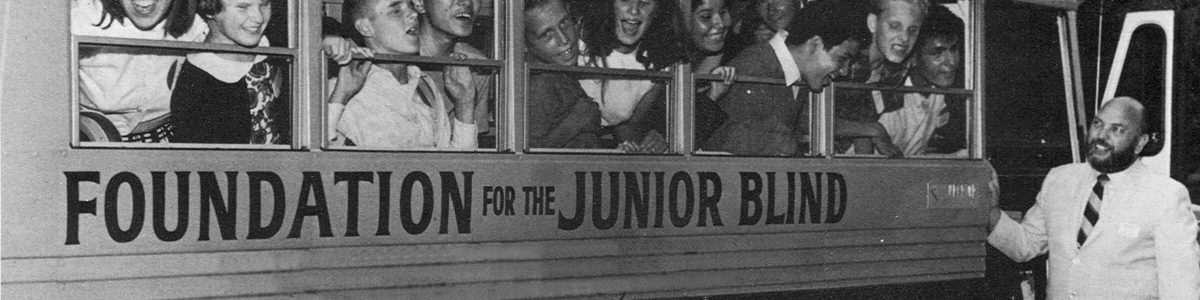
In 1953, a charismatic visionary named Norm Kaplan had the idea that young people who are blind should share in the same recreational and social opportunities that sighted children enjoy. He, his wife, Nadia, and dozens of friends and volunteers began taking children with visual impairments on weekend outings—and the Foundation for the Junior Blind was born.
Norm and Nadia did not realize it at the time, but they were laying the groundwork that would drive Junior Blind’s life-changing work: promoting the welfare, well-being and adjustment of underserved children, youth and their families.
Check out our journey through the years:
1953
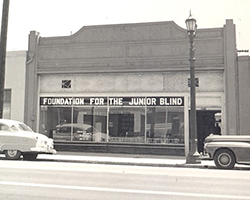
The Foundation for the Junior Blind (“The Foundation”) was created so that youngsters who were blind or visually impaired could participate in recreational activities. Back then, blindness was many children’s only disability.
1955
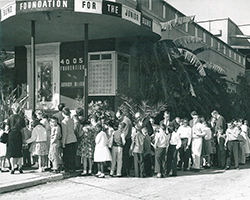
Junior Blind moved to a larger location in Los Angeles to accommodate the increasing number of youngsters participating.
1958
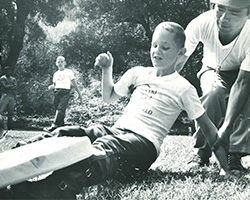
Henry Bloomfield and the Bloomfield Foundation purchased a 40-acre campground in Malibu, California, and donated its use to the organization, so that campers with vision loss could enjoy traditional summer camp experiences.
1962
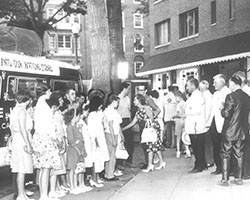
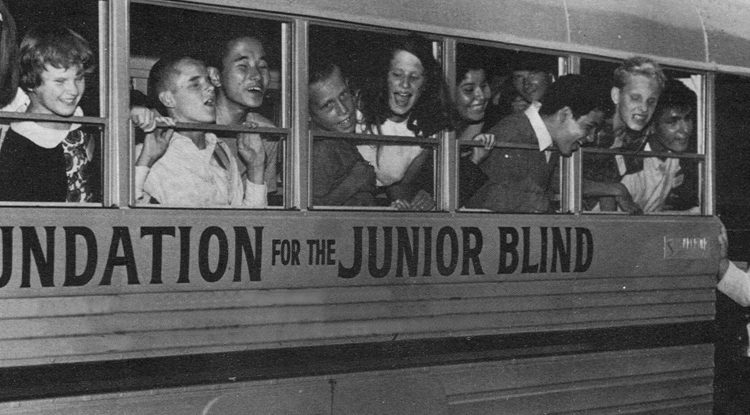
Nadia Kaplan took 24 teenagers with visual impairments on a revolutionary 90-day sightseeing bus tour of the United States with the help of dozens of local Lions Clubs across the nation.
We opened our special education school as a day program for children with more significant disabilities.
1963
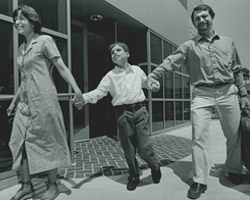
We opened a children’s residential program to provide round-the-clock care to children whose severe special needs had proven too overwhelming for their families.
1964
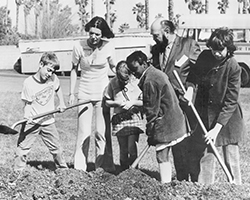
Junior Blind moved to our current 8-acre campus, formerly the site for the California Military Academy.
1965

A photograph of two boys who are blind at Camp Bloomfield titled “The Blind Are Also Color Blind” circulated internationally as the symbol for the American civil rights movement.
1970
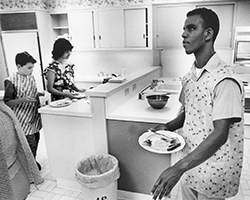
We opened the Davidson Program for Independence in response to a growing need for rehabilitation services for transition-age youth with vision loss and adults who are newly blind.
1983
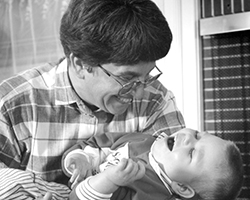
We inaugurated specialized in-home services for babies with visual impairments, many of whom had multiple disabilities, through the Infant-Family Program.
1985

After Founder Norm Kaplan retired, Robert Ralls became the organization’s second president.
1989

We launched our Visions: Adventures in Learning, weekend recreational program, offering teens with vision loss enriching, life-changing experiences, including skiing, kayaking and surfing.
1990
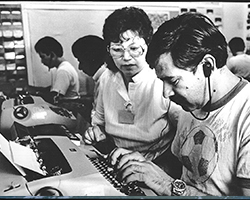
Junior Blind established the first assistive technology center in the nation for individuals with visual impairments.
2002
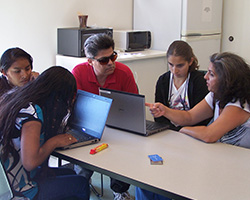
We launched a youth transition program assist teens with visual impairments in reaching their educational and career goals. Formerly known as the STEP program, our youth transition services expanded to serve teens throughout California in 2011.
2005
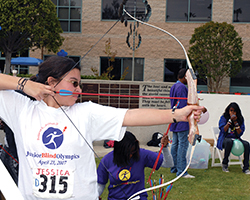
In collaboration with the Optimist Blind Youth Association, the Foundation presented the first Junior Blind Olympics. The event was renamed Wayfinder Paralympic Games in 2018.
2006
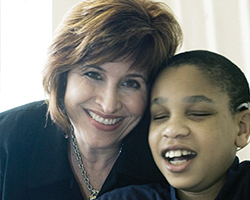
The Foundation for the Junior Blind was renamed Junior Blind of America.
After 21 years of dedicated service, Robert Ralls retired, and Miki Jordan became president and CEO.
2008
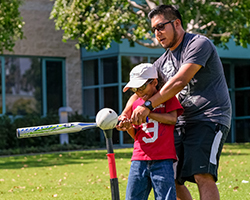
Responding to needs in our community, Junior Blind launched an after-school program for children with vision loss, a vision screening program for low-income children and an early childhood program for children ages 3 to 6 with visual impairments.
2010
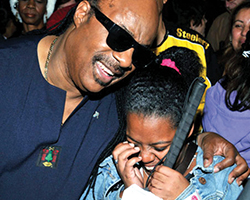
Legendary artist and longtime supporter, Stevie Wonder, joined Junior Blind’s Board of Directors.
2011

Junior Blind received accreditation from the California Alliance of Child and Family Services, reflecting our commitment to delivering the highest quality services.
2012
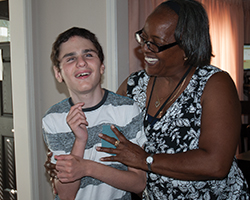
Recognizing the value of community integration for people with profound disabilities, Junior Blind opened group homes for children and for adults in the community. Children in our children’s residential program moved into the new group homes.
2013
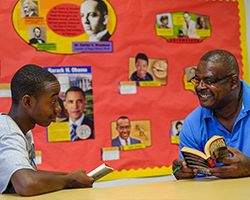
The renowned Hatlen Center for the Blind in San Pablo in Northern California merged with Junior Blind as its newest adult residential rehabilitation program.
With years of experience and expertise assisting children with serious medical and behavioral challenges, Junior Blind relaunched our children’s residential program to help medically fragile foster youth. We also opened a mental health program for our residents and people in low-income communities.
2014
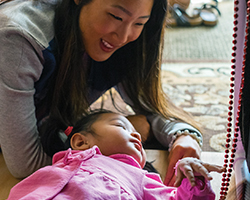
Blind Babies Foundation in Northern California, serving the Central Valley and Bay Area, merged with Junior Blind as our newest early intervention program.
Junior Blind was accredited by the Council on Accreditation, recognizing our dedication to best-practices and continuous quality improvement.
2016

Junior Blind was one of only five organizations chosen to provide short-term emergency placement for children, from birth to age 4, who need safe, temporary shelter due to removal or disruption in their families.
2017
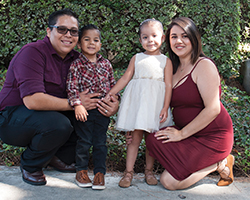
Concept 7, a foster family and adoption agency, merged with Junior Blind, enabling us to find homes for abused, neglected or abandoned children.
Recognizing the need for mental health services in the blindness community, we began providing adjustment counseling to people experiencing vision loss and their families.
2018

Junior Blind of America has a new name: Wayfinder Family Services. We’re so proud of Junior Blind’s long history of serving children, youth and adults who are visually impaired and those with developmental disabilities. In recent years, we expanded to help children and families facing different challenges. The new name welcomes all the children and families who seek assistance from the organization. The name is inclusive, strong communicates how we approach our work: we are partners. From the small challenges to the biggest achievements, we partner with children, adults and families along their journey.
2019
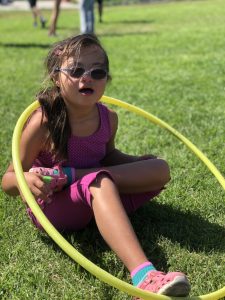
After the 2018 Woolsey Fire destroyed the Camp Bloomfield property in Malibu, California, the spirit of the program continued the following summer. In 2019, Camp Bloomfield sessions were held at the Port Fermin Outdoor Education Center in San Pedro. Campers of all abilities enjoyed the great outdoors, campfire activities, science, sports and more!
2020
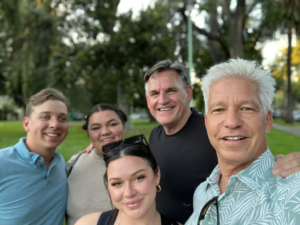
Lilliput Families became part of Wayfinder to enhance our child welfare services and impact across California. Through this merger, Wayfinder now has comprehensive services that focus on prevention and permanency—including kinship care, family finding, visitation and coaching and family strengthening programs. We are now also one of the largest foster care and adoption agencies in California.
2021
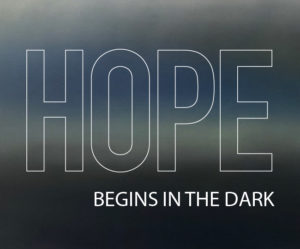
The pandemic has caused so much grief and pain in our society and to our clients and staff. It has been a time of loss. Through it all, Wayfinder has been a beacon of hope. Like Anne Lamott wrote, “Hope begins in the dark…you do the right thing… you wait and watch and don’t give up.” That’s what Wayfinder is doing, and for that I am extremely grateful to our staff. I am so impressed with their innovation and commitment. — Miki Jordan, Retired CEO
wayfinder’s programs and services continued uninterrupted during the pandemic, serving the most vulnerable in our community.
2022
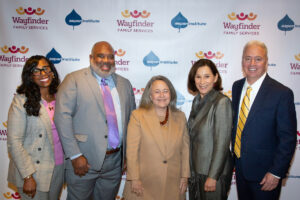
Wayfinder Family Services proudly partnered with the Aspen Institute Society of Fellows for a panel discussion about the impact of the pandemic on children, youth and families in Los Angeles. According to the American Academy of Pediatrics, the American Academy of Child and Adolescent Psychiatry and the Children’s Hospital Association, the pandemic caused a mental health crisis for children and youth. The effects were especially devastating for the children and families in Wayfinder’s programs: people of color, low-income families and those with disabilities. The event brought philanthropic- and civic-minded individuals together to learn about this crisis and how to be a part of the solution.
2023

Wayfinder launched the Older Individuals with Blindness (OIB) program. OIB is Wayfinder’s first program for seniors with vision loss. Vision loss in older adults can reduce their ability to care for themselves, live independently and navigate their community. Wayfinder provides adults ages 55+ who are visually impaired with training in areas like the use of assistive technology, orientation and mobility to get around in their communities, and more.
2023

Jay Allen was appointed as president and chief executive officer of the organization. Allen assumed the CEO role in addition to his current duties as president. Allen is only the fourth CEO in the organization’s 70-year history.
“Jay leads with heart and integrity, and I am thrilled that someone with his vision and commitment will steer Wayfinder into the organization’s next phase,” said Miki Jordan, Wayfinder’s outgoing CEO. Jordan retired after 17 years of leading the organization.
2024

Wayfinder surpasses targets in satisfaction and equity
We exceeded our 90% target across all programs.
2025
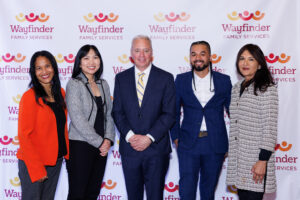
California Surgeon General Dr. Diana E. Ramos was featured as a panelist at Wayfinder’s annual event, The Conversation. Youth justice organizer Josue “Swey” Pineda and Wayfinder Family Services chief operating officer Dawn Vo-Jutabha, PhD. joined her on the panel moderated by Emily Williams, CEO of UCLA-UCSF ACEs Aware Family Resilience Network (UCAAN). The panel explored Adverse Childhood Experiences (ACEs).